Headphones on Noon UAE: seller context — bank offer versus coupon
The first hurdle in this comparison is recognising the nature of each discount. Bank offers on Noon usually reflect a partnership between the seller and a financial
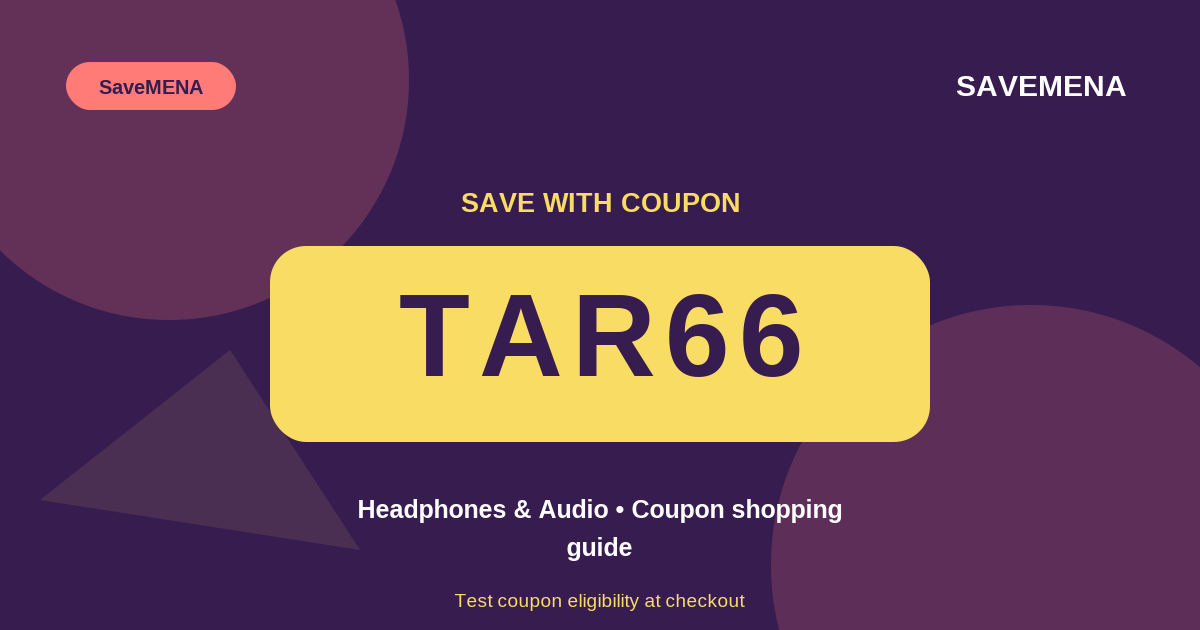
Codes available to try while comparing
These codes are not guaranteed for the article topic or listed brands; test them at checkout and use the live result.
1. Understanding the Midnight Discount Battle: Coupons vs Bank Offers
The first hurdle in this comparison is recognising the nature of each discount. Bank offers on Noon usually reflect a partnership between the seller and a financial institution, enabling a direct deduction tied to your credit or debit card. In contrast, coupons such as TAR66 are generic discount codes you input during checkout, promising a flat reduction regardless of the seller, provided the code remains active and the item qualifies. This fundamental difference frames how sellers calculate promotional budgets and how often they rotate discounts, which is key to predicting which option will apply at a given moment.
From a seller standpoint, bank discounts can boost customer loyalty by leveraging card‑holder incentives, often driving higher cart values. Coupons, however, are a simpler, mass‑appeal tool that sellers use to attract price‑sensitive shoppers. Understanding this seller preference helps set realistic expectations: bank discounts may be more consistent per product line, while coupons might fluctuate to align with broader marketing pushes. Consequently, shoppers should examine which channel aligns with their purchase urgency and whether the seller offers explicit support for either type.
2. How Sellers on Noon Deploy Bank Discounts for Headphones
Sellers listing headphones on Noon often partner with banks that provide a pre‑configured discount range. This setup means the discount becomes visible in the product’s details page after you add the headphone to your cart and log in with the partner bank’s credentials. The actual percentage or amount is omitted publicly; instead, the seller’s policy states that a bank‑linked discount may become applicable at checkout. Accordingly, the shopper cannot preview the exact savings beforehand; they must rely on the checkout‑time confirmation to verify the deduction.
When a seller uses a bank discount, the discount application is transparent during the payment stage, typically reflected in a line item labeled “Bank Discount” or “Bank‑Partner Promotion.” The seller must also ensure that the headphone’s stock, delivery window, and payment method remain compatible with the bank’s terms. As a buyer, you should confirm that the bank’s operating hours and the Noon platform’s policies align, especially if you plan a time‑sensitive purchase. These seller‑centric checks help you avoid late‑stage surprises or conflicts during order processing.
3. The TAR66 Coupon: What Shoppers Can Expect Before Applying
The TAR66 coupon can be entered during the checkout phase with the headphone item in your bag. Despite its availability to try, this code does not guarantee a discount; the seller may impose merchant‑specific eligibility or synchronize it with removal from the cart. Often, a coupon’s success hinges on matching the product’s SKU, minimum purchase value, or buyer’s account status. These conditions are not disclosed ahead of time, so trial is the only method to confirm its applicability.
In seller terms, the TAR66 code can be a temporary promotional tie‑in, which means the advertiser's margin adjusts upon successful utilisation. Hence, the coupon may be inactive for certain headphone models or when the seller shifts focus to bank discount alliances. Because of this, it is wise to cross‑check the headphone’s seller page for mentions of active promotions and to verify the coupon’s status solely during checkout. A confirmed deduction on the summary page provides you with the definitive proof of its legitimacy.
4. Seller‑Specific Advantages and Limitations of Bank Discounts
Bank discounts typically promise a consistent reduction that the seller has already earmarked for the headphone. From a seller’s viewpoint, this comes with the advantage of secure payment processing: the bank’s transaction guarantees often reduce charge‑back risks and streamline reconciliation. Consequently, some sellers may choose to prioritise bank discount partners over coupons to preserve margin stability.
On the downside, bank discounts can carry hidden constraints: the discount may only activate if the buyer’s credit score satisfies the bank’s criteria or if the product has a certain stock level. Sellers must also adapt to any backend adjustments the bank requests, which can slightly delay the fulfilment timeline. In a seller‑centric analysis, these factors mean that while bank discounts can bring higher trust, they may also restrict the flexibility of price adjustments compared to a coupon that the seller can toggle freely.
5. Comparing Credit‑Card Savings to Coupon Savings: A Practical Walkthrough
A practical way to compare the two channels is to add the headphone to your cart, complete the checkout flow, and observe the discount tokens that appear. If you qualify for a bank discount, the checkout will list a “Bank Discount” line item *before* final payment. If you input TAR66, the discount appears only after you hit “Apply Coupon.” Importantly, the seller cannot override one over the other; if both apply, the system will normally choose the higher deduction, but that is subject to the seller’s rules.
To keep the process clear, conduct this test separately: first, try coupon application without the bank card; then, redo checkout using a bank‑linked card and disable any coupon. This method allows you to visually confirm which deduction is applied and by how much. The seller‑centric perspective of which strategy to use hinges on how often a particular seller offers bank discounts over coupons for headphone categories, which you can gauge by noting how often the bank line appears in the summary.
6. Cart‑Level Checks: What to Verify for Each Discount Type
From a seller’s point of view, the checkout experience is a critical checkpoint. Verify that the headphone’s quantity and size are correctly reflected before proceeding.A coupon is not guaranteed; verify its result at the retailer checkout. If you see no such line, that indicates either the bank discount isn’t active for that product or that your card isn’t the partner card.
For the TAR66 coupon, double‑check after clicking “Apply.” The summary should update with a new line, affirming the deduction. If you do not see any change, the coupon might be invalid or not applicable to this specific headphone SKU. In both scenarios, the seller’s final offers are what you’ll see in the “Checkout Summary,” and those will be the definitive evidence of the discount at hand.
7. Profile Management: Staying Updated on Bank‑Partner Promotions
Sellers that rely on bank offers usually link discount visibility to your user profile. Logging into Noon with a bank‑linked card could activate notifications about new bank discounts, thereby creating a seller‑focussed advantage. It is essential to keep your payment details up to date and to monitor any email alerts from Noon or the bank regarding promo expiries. Such updates keep the seller’s promotional ecosystem current and enable you to benefit from the latest bank discount.
Meanwhile, coupon updates tend to be more sporadic and usually appear on the product page or through email blast campaigns. If you often use TAR66, maintaining a list of active coupon codes sourced from the seller’s community or forums can help you anticipate potential savings. Seller‑centric decision making involves balancing these two flows: bank discounts with reliable activation tied to seller policy, versus coupons that may pop up unexpectedly but offer instant, albeit uncertain, discounts.
Related SaveMENA pages
Related articles
Official sources to check
Frequently asked questions
How do I know if my bank is eligible for a Noon discount?
Eligibility depends on the specific bank‑partner agreement Noon has with each institution. You can check by logging in with the card during the checkout process; if the discount appears, the bank is eligible for that transaction.
Will the TAR66 coupon apply to all headphone models on Noon?
Not necessarily. Coupon applicability varies by product SKU and seller policies. Verify by entering the code during checkout; only a successful deduction confirms its applicability.
What happens if both a bank discount and the TAR66 coupon are eligible?
Noon’s system typically selects the higher saving, but final application depends on the seller’s discount rules. After applying the bank discount line, you can attempt the coupon to see if it overrides or adds to the discount.