School & Stationery on Noon UAE: model specifications — buyer checklist · TAR62
Paper quality is a cornerstone of any stationery selection. The thickness, measured in grams per square meter (gsm), dictates how well a pen’s ink sits on the sheet.
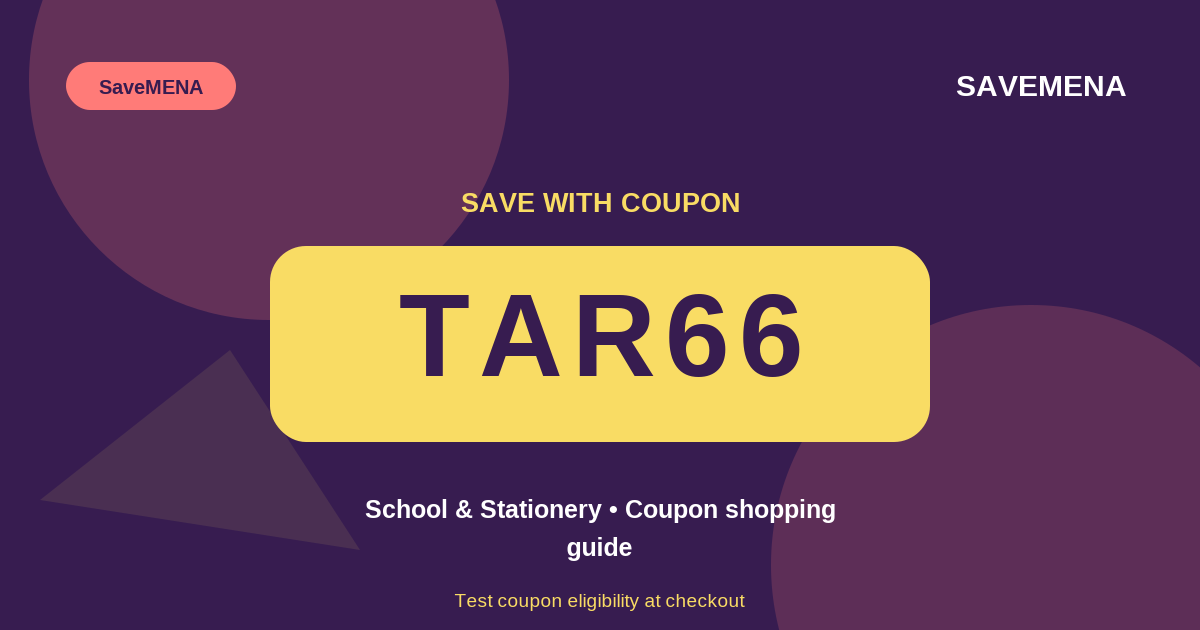
Codes available to try while comparing
These codes are not guaranteed for the article topic or listed brands; test them at checkout and use the live result.
Paper Specifications for Notes and Handouts
Paper quality is a cornerstone of any stationery selection. The thickness, measured in grams per square meter (gsm), dictates how well a pen’s ink sits on the sheet. A standard writing paper sits around 70–80 gsm, providing a smooth flow that reduces feathering. Heavy‑weight paper, at 90–100 gsm, is less absorbent, ideal for students who use thick‑line pens or markers.
For subjects requiring color‑coding or diagramming, consider stock that is archival and lightfast—meaning it won’t fade when exposed to sunlight or store‑hold periods. A matte finish offers a comfortable surface for fountain pens, while a slightly glossy finish can enhance the appearance of hand‑drawn graphs. Be sure to look at the manufacturer’s specifications sheet for precise details.
Binding Options and Durability Factors
Durability depends largely on the construction of the binding. Opt for saddle‑stitch binding when you need a lightweight notebook that will go through several seasons of use without tearing corners. Coil binding is easier to flip open but may slip under heavy usage; reinforced coil with a hidden guiding bar can mitigate this.
When evaluating hard‑bound models, check for a reinforced spine that can handle the weight of many pages. Some producers add a small pocket inside the cover for loose notes, a useful feature for laboratory participants who’mike to keep lab protocols adjacent to their main workbooks. The type of glue—hot melt or pressure—affects the paper’s resistance to humidity and accidental bending.
Writing Instrument Models: Calibre, Ergonomics, and Tints
Mechanical pencils are available in various calibre sizes, commonly 0.5 mm and 0.7 mm. The smaller calibre is accurate for technical drawings, while the larger offers smoother strokes and better visibility for school notes. When assessing ergonomic design, look for a balanced weight distribution and a comfortable grip that supports prolonged writing sessions.
For pens, the nib or tip width influences legibility and ink spread. Ballpoint pens in 0.5 mm and 0.7 mm are ubiquitous, but gel and rollerball pens provide extra sheen. If your academic work involves highlighting, choose pens with matte inks to reduce glare on screens. Finally, verify that the model’s refill system uses cartridges that are easily interchangeable, as this avoids frequent downtime during tests or exams.
Organizers and Folder Systems: Size, Capacity, and Materials
Choosing the right organizer can streamline your study workflow. A spiral‑bound folder with multiple dividers allows you to segment subjects while keeping loose sheets from swirling away. Ensure the uprights are sturdy; some use reinforced plastic or laminated steel to prevent bending when fully loaded.
In terms of dimensions, a standard desktop organizer measures approximately 30 cm by 20 cm, fitting comfortably in a locker or desk drawer. If portable capacity is a priority, look for a roll‑on or compact version with a zipper seal that secures thin or thick documents against moisture. The material—be it recycled cardboard or durable polymer—sets the tone for sustainability and weight.
Color‑Coordinate Systems and Academic Use Cases
Many educational institutions adopt color‑coding schemes to help students differentiate between subjects, assignments, and agendas. Staples or tabs come in a spectrum from light blue to maroon, each normally specified for a particular department or discipline. When evaluating a set, confirm that the colours remain vivid under both natural and artificial lighting.
For executive‑level spreadsheets or grade reports, a grey‑scale notetaking set may be preferable, as it reduces visual noise. Digital design projects often use high‑contrast image‑ready pages, so look for specifications that guarantee color fidelity. Checking the bleed‑through factor, indicated in manufacturer specs, helps identify whether annotations with inkjet or laser‑printed text remain clear on subsequent pages.
Digital Integration: Smart Pens and Scan‑Ready Paper
Smart pens pair with mobile devices to digitise handwritten notes in real time. These pens typically use two‑tone LEDs for line tracing accuracy. When selecting a smart pen model, pay attention to the firmware version—ensuring compatibility with the latest app updates—along with battery life, which is usually measured in hours of continuous use.
Scan‑ready paper contains subtle grid patterns that facilitate optical character recognition (OCR). The paper’s weave index, often on the data sheet, informs the scan quality for text extraction devices. For e‑learning platforms that integrate scanned assignments, choose a paper that is certified for a the discount shown at checkout OCR pass rate.
Final Checklist: Applying the TAR62 Coupon and Verifying Delivery
Before finalizing your order, navigate to the checkout screen and enter the coupon code TAR62 into the promotional field. After hitting apply, you will see whether the coupon is accepted for the selected items; sometimes the code is only valid for a subset of models. If the discount does not appear, double‑check that the items meet any unstated conditions such as being a new‑customer exclusive or not exceeding a minimum spend.
Once the coupon status is confirmed, review the delivery information. Verify that the model’s shipping weight aligns with the logistic options you have chosen. Check whether a particular product requires a standard delivery fee or if it qualifies for free shipping based on the courier’s thresholds. After confirming all details, proceed to payment, and the total will reflect any applicable discount at that moment.
Related SaveMENA pages
Related articles
Official sources to check
Frequently asked questions
Does the TAR62 coupon apply to all school and stationery items on Noon UAE?
The coupon may not be universal; its eligibility depends on product categories, seller, and occasionally on purchase volume. To know whether an item accepts it, simply try entering TAR62 during checkout.
Can I combine the TAR62 coupon with other promotions or store credit?
Nos existence of such combinations is not guaranteed. The e‑commerce platform will indicate if additional credits or sales can be simultaneously applied.
Will the coupon affect the shipping fee or delivery time for my order?
Coupons typically influence only the product price. Shipping fees and delivery schedules remain governed by the freight service and the order volume.